 Overview of Eswatini's Democracy and Political Stability (as of November 15, 2025)
Eswatini, Africa's last absolute monarchy under King Mswati III, continues to face entrenched challenges to democratic governance and human rights. While the country has maintained surface-level political stability in 2025 with no large-scale internal protests, underlying tensions persist from the violent crackdown on pro-democracy movements in 2021. International assessments classify Eswatini as "Not Free," highlighting severe restrictions on political pluralism, free assembly, and judicial independence. The government's resistance to reforms, coupled with impunity for past abuses, fuels ongoing discontent among activists, opposition groups, and civil society. Economic pressures, including high unemployment and inequality, exacerbate these issues, though weak opposition structures have limited mobilization this year.
Democracy Status
Eswatini's political system remains dominated by the monarchy, with the king holding ultimate authority over the executive, legislature, judiciary, and traditional chieftaincy structures. There are no competitive elections for the head of government, and political parties are effectively banned under the Tinkhundla system, which favours royal appointees and limits opposition influence. Freedom House's 2025 report assigns Eswatini a score of 17/100 ("Not Free"), with just 1/40 for political rights and 16/60 for civil liberties. Key deficits include:
- Electoral Process: 0/12 – No free and fair elections; parliamentary seats are filled via non-partisan "inkhundla" contests that exclude meaningful opposition.
- Political Pluralism: 1/16 – Dissent is criminalized under sedition and terrorism laws.
- Rule of Law: 4/16 – Judiciary lacks independence, with courts upholding repressive statutes in 2024.
Human Rights Watch's 2025 report notes a deterioration in civic space, with authorities using outdated laws like the 2008 Suppression of Terrorism Act to target critics. No progress toward constitutional reforms or multi-party democracy has occurred, despite calls from the UN and African Union.
Key Events in 2025While 2024 saw harsh judicial actions against 2021 protesters (e.g., long prison sentences for two former MPs), 2025 has featured sporadic developments rather than widespread unrest:
- July 2025: Amnesty International criticized delays in justice for opposition MP Bacede Mabuza, whose terrorism trial highlighted judicial bias.
- September 2025: Exiled pro-democracy activists, including members of the People's United Democratic Movement (PUDEMO), protested outside the US Embassy in Pretoria, South Africa, against a reported US-Eswatini deportation deal that could force dissidents back to face persecution. About 100 demonstrators chanted against the monarchy and US involvement, drawing attention to ongoing exile communities.
- October 2025: HRW released a report documenting impunity for security forces' abuses during the 2021 protests, including interviews with survivors of shootings and torture. It called for independent investigations into over 70 deaths. Separately, an activist leader was reportedly poisoned amid plans for October demonstrations, though no major events materialized.
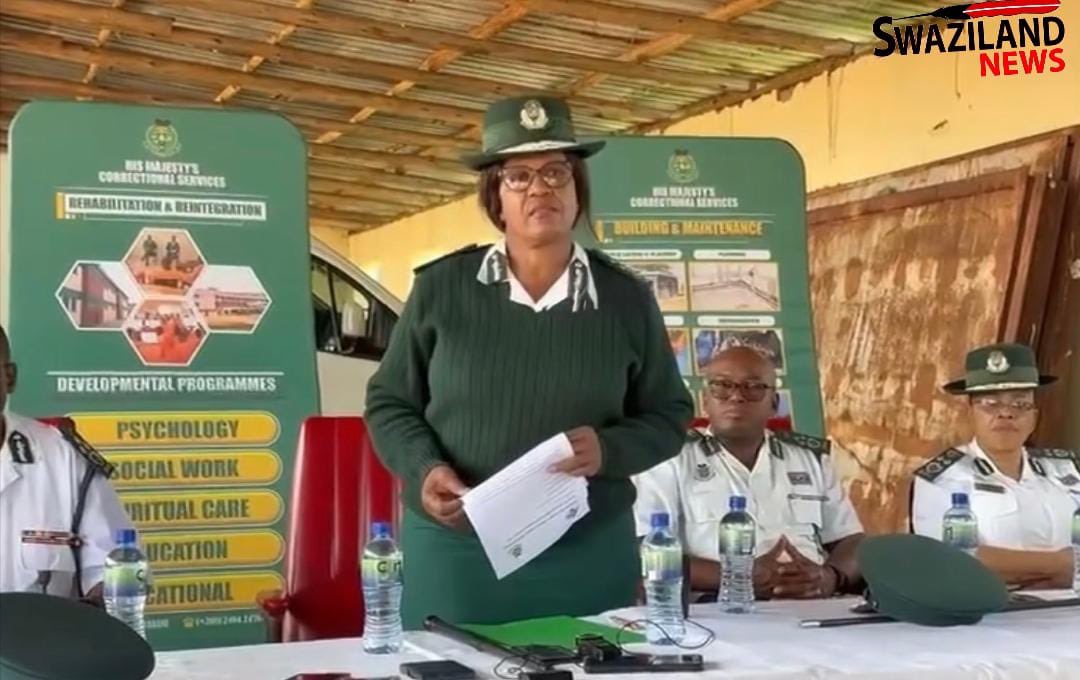
- November 4, 2025: Former opposition MP Mthandeni Dube was released after over four years in prison on terrorism charges related to supporting 2021 pro-democracy protests. His pardon followed a public apology to the king, seen by critics as coerced. Dube, arrested alongside Bacede Mabuza for parliamentary advocacy of reforms, had been sentenced to 18 years in 2024. This release offers a rare glimmer of leniency but underscores the conditional nature of freedoms in Eswatini.
These events reflect a pattern of exile-based activism and selective amnesties, with domestic dissent suppressed through arrests and harassment.
Political Stability Assessment
Fitch Solutions forecasts low social stability risks for 2025, attributing this to fragmented opposition, limited civic organizing, and the monarchy's unchallenged authority. An August EU report described the 2024 political and security environment as stable, with no major disruptions. However, structural risks loom: 83% of citizens rate the government's anti-corruption efforts poorly (Afrobarometer, February 2025), and economic woes—like a widening fiscal deficit projected for FY2025—could ignite future unrest. International pressure, including from the US State Department urging reforms, continues but has yielded little change. Overall, stability is fragile, sustained by repression rather than inclusion.
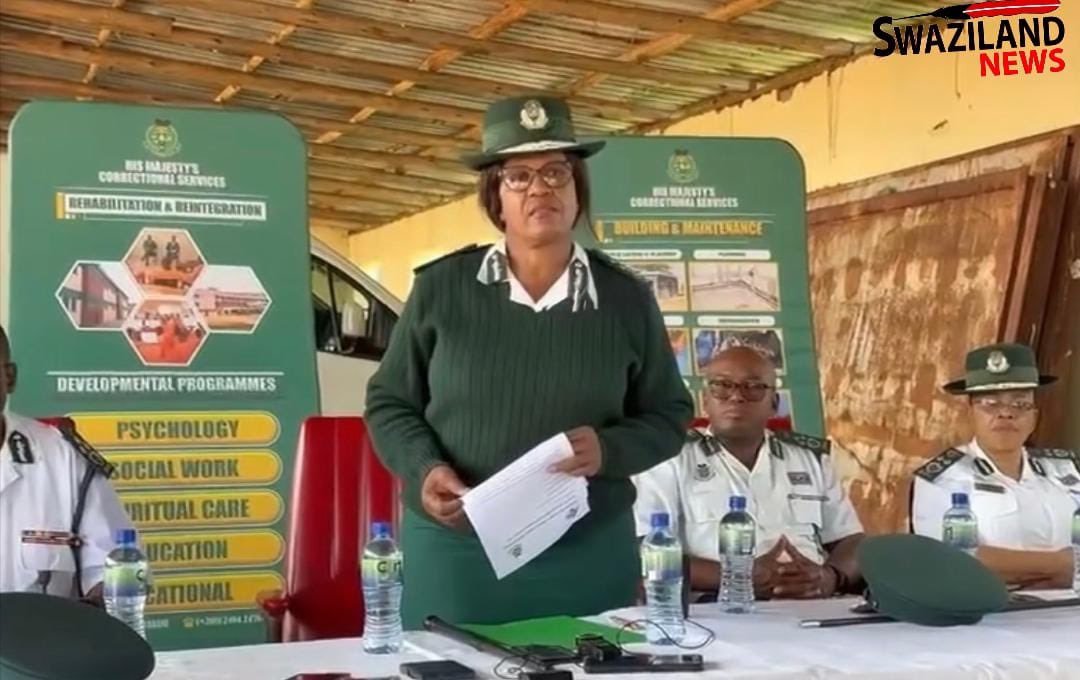
To illustrate recent developments, here's a photo from the November 4, 2025, release of MP Mthandeni Dube (source: Swaziland News on X). It shows a formal handover ceremony at a correctional facility, with officials in green uniforms standing under a shelter amid banners promoting rehabilitation programs, developmental initiatives, psychological support, and social work. A woman in a green hat and sweater holds documents at a table with water bottles and notebooks, flanked by male officers in hats, emphasizing the state's framing of the event as a "reintegration" success. (Image URL: https://pbs.twimg.com/media/G45g8VDW0AAB3ao.jpg)