
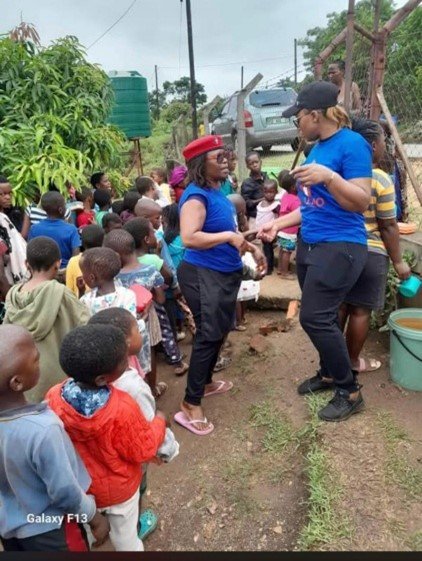
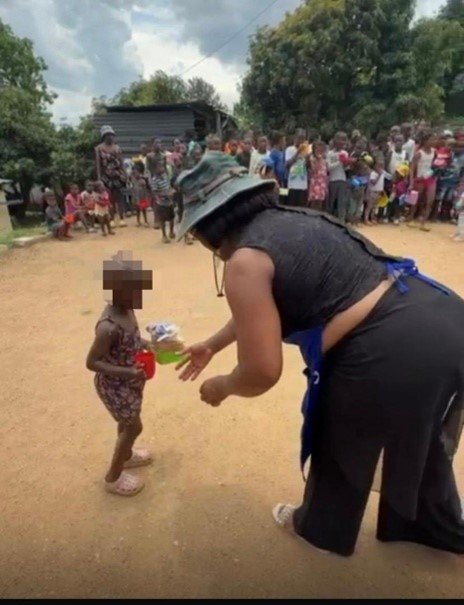
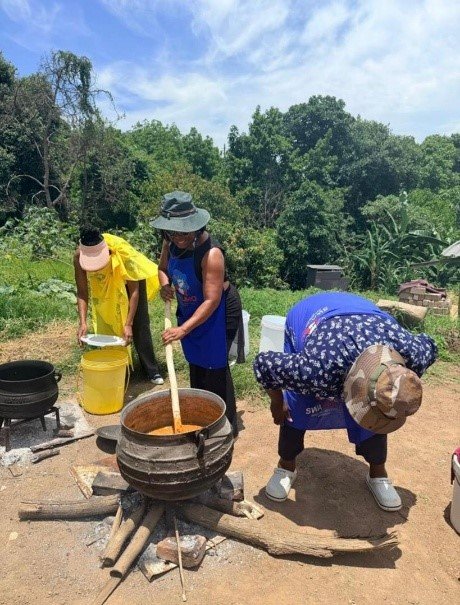
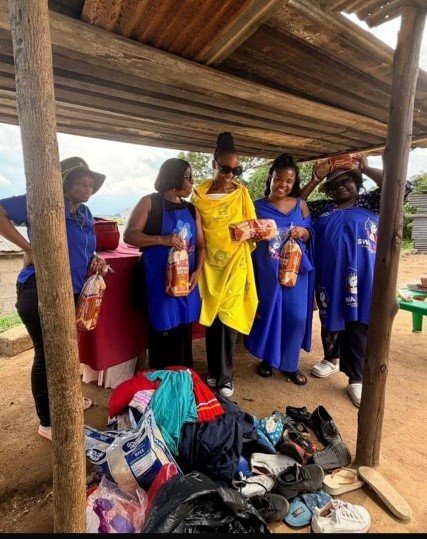
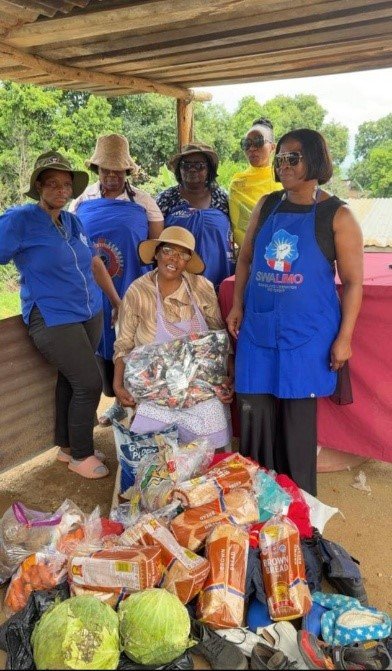
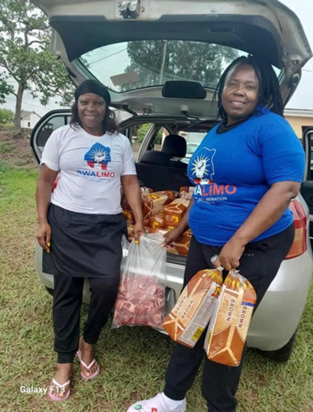
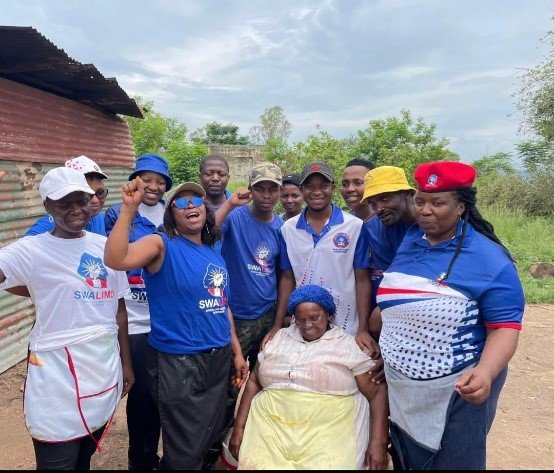
Women's Command Unit (WCU) of the organization carried out community service programme at a three local care points, providing food, clothing, and support to over 400 destitute children, The team donated bread, vegetables, clothing, and other essential items, while also preparing and serving meals for the children. The initiative was motivated by a commitment to support vulnerable families and children facing economic hardship. Through acts of compassion and solidarity, volunteers spent the day cooking, distributing donations, and interacting with the children, bringing hope and encouragement to the community.
This outreach reflects the organization’s dedication to serving those in need and contributing positively to communities across Eswatini.
 |
 |
 |
 |
 |
 |
 |
|
The Organization’s official ceremonial and identification attire designated for delegates, members and leadership participating in the conference proceedings. These are presented as evidence of the organization’s preparedness of the 2026 NGC & related constitutional endorsement activities.
 |
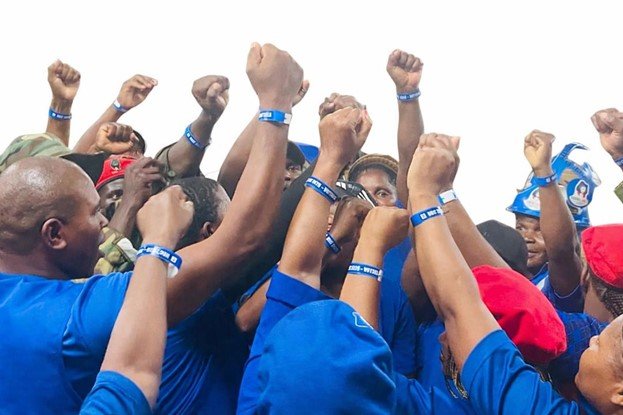 |
| Ceremonial Regalia | ID Wristbands |
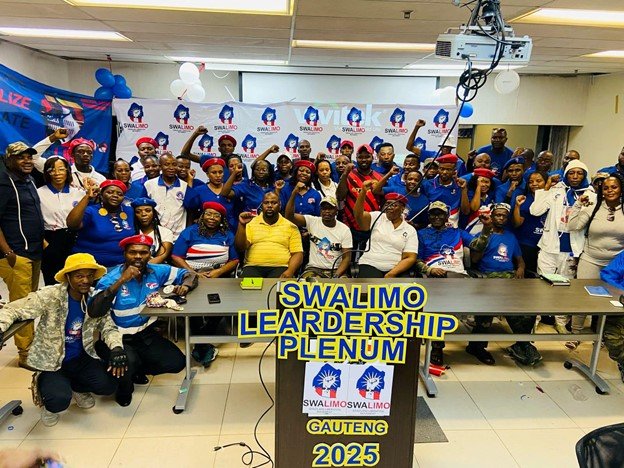 2025 Swalimo Leadership Plenum convened all leadership structures to review & strengthen the Organization’s governance framework. The meeting focused on amending the Constitution to align it with the organization’s current needs & future objectives
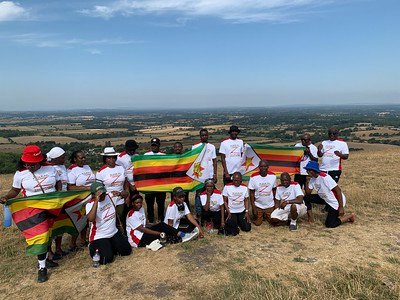 UK Zimbabwean diaspora [our next door brothers and sisters] on the 15-16th August 2026 - in the UK - conducted their 10th Annual "Walk for Freedom" - itself a milestone of dedication, commitment, protest and endurance!
This is no 'ordinary' walk for Zimbabweans, it is carried out in August each year, around the "Heros Day" Event in Zimbabwe - which is to commemorate their war of independence SEE MORE HERE, on the second Monday in August. This Walk for Freedom has its roots back in 2016 when several Zimbabweans and friends watched the play "After Independence" at the Arcola Theatre in London. Rashiwe Bayisayi was inspired to "do something" - something out of the ordinary. So a few days later Rashiwe and John Burke set out to find a walking path from Brighton to London!!
The rest is history as they say!
With the formation of ZHRO in October 2016 this has now evolved into a well organised political and social event - itself now getting unwanted recognition from the unjust and illegal Zanu PF regime, masquerading as a government in Harare, Zimbabwe - and doing their worst to stamp out and stop all and any opposition - in Zimbabwe or even elsewhere!
This year's team had 31 Walkers and a dozen support team to supply food, drink and transport along the 100km route. A full write up is being carried out as we speak on their main website {CLICK HERE TO READ}
Perhaps an idea for the SWALIMO UK members?
ENDS
VUTSELA IN ACTION:
SWALIMO NGC 2026 CONSOLIDATES THE FLAME OF STRUGGLE
March 1 2026 6:43:14 PM SWALIMO NGC 2026: VUTSELA IN ACTION
28 February 2026 marked more than a statutory meeting. It marked institutional maturity. Under the powerful theme:
VUTSELA – Fanning the Flame of Struggle:
From Consciousness to Collective ActionThe Swaziland Liberation Movement (SWALIMO) convened its 2026 National General Council (NGC) at a decisive historical moment — standing at the threshold of the Inaugural National Policy & Elective Conference and firmly anchored in the Liberation Road Map (LRM 2038).This was not rhetoric. It was governance in motion.
Eswatini's Economic Challenges:
An Update as of November 2025
Eswatini, a lower-middle-income country with a population of approximately 1.2 million and a GDP per capita of around $3,898 (2024), faces persistent structural economic hurdles despite modest recovery signals. The economy, heavily reliant on services (over 50% of output) and manufacturing (about one-third, including sugar and soft drink concentrates), grew by 3% in 2024, down from 3.5% in 2023, hampered by a severe drought and weaker services output. The International Monetary Fund (IMF) projects a rebound to 4.3% growth in 2025 and 4.6% in 2026, driven by domestic investments and manufacturing recovery, though this outpaces regional averages but falls short of addressing deep-seated issues. Inflation eased to 4% in 2024, supported by lower food prices, but vulnerabilities to external shocks and domestic inefficiencies persist.Key challenges stem from high unemployment, entrenched poverty, fiscal pressures, and limited diversification. The economy's dependence on volatile Southern African Customs Union (SACU) revenues— which fund over 20% of the budget—exacerbates instability, with a projected widening fiscal deficit in FY2025. Below is a summary of major challenges, followed by key indicators.Major Economic Challenges
- High Unemployment and Youth Joblessness: Unemployment stands at 34% overall, with youth rates (ages 15-24) at 56-58% as of 2023, the highest in the Southern African Development Community (SADC). Limited formal job creation, a skills mismatch in education, and an overabundance of state-owned enterprises (SOEs) stifling private sector competition contribute to this. With over half the population under 25, this risks social unrest and a lost demographic dividend.
- Poverty and Inequality: About 55% of the population lives below the $4.20/day poverty line (PPP 2021), unusually high for a lower-middle-income nation, affecting rural areas hardest due to climate shocks like droughts. The Gini coefficient of 54.6 reflects extreme inequality, worsened by unequal access to services and opportunities. Food insecurity impacts one-fifth of households.
- Fiscal and Debt Pressures: The fiscal deficit narrowed slightly to 1.3% of GDP in FY2024/25 but is expected to widen amid rising wage bills, capital spending, and interest payments outpacing SACU inflows. Public debt reached 40.5% of GDP by end-2024, with domestic arrears to the private sector at 3.5% of GDP, eroding business confidence. SOEs drain resources through inefficiencies and subsidies.
- Sectoral and Structural Weaknesses: Agriculture, employing 25% of the workforce, contracted due to the 2024 drought, while manufacturing faces global trade pressures (e.g., potential U.S.-China trade war spillovers). Low financial inclusion—37% of adults unbanked—hampers growth, and the business environment is rated "mostly unfree" due to regulatory hurdles and corruption perceptions. Human capital gaps, including high HIV prevalence, stunting, and poor education quality, limit productivity.
- External Vulnerabilities: As a small open economy, Eswatini is exposed to global commodity price swings, climate events, and SACU revenue volatility (down 14% in 2024). The current account surplus shrank to 0.8% of GDP in 2024, with international reserves covering just 2.4 months of imports. Regional trade disruptions and slow diversification into tourism or renewables add risks.
Key Economic Indicators (2024 Actuals and 2025 Projections)
|
Indicator |
2024 Value |
2025 Projection |
Notes/Source |
|
Real GDP Growth |
3.0% |
4.3% |
Driven by manufacturing; drought-hit agriculture. |
|
Inflation (CPI) |
4.0% |
3.5% |
Food inflation down to 3.9%. |
|
Unemployment Rate |
34% (overall); 56% (youth) |
No change expected |
Highest in SADC region. |
|
Fiscal Deficit (% of GDP) |
-1.3% |
Widening to -2.0% |
SACU volatility key factor. |
|
Public Debt (% of GDP) |
40.5% |
42% |
Rising due to arrears and spending. |
|
Poverty Rate ($4.20/day) |
55% |
53% (slight decline) |
Climate shocks persistent. |
|
Gini Coefficient |
54.6 |
Stable |
Among world's highest. |
Policy recommendations from the IMF and World Bank emphasize fiscal consolidation, SOE reforms, digital economy investments, and climate-resilient agriculture to unlock growth.
However, implementation lags amid political constraints. For visuals, recent World Bank reports feature charts on poverty trends and sectoral contributions (e.g., see their July 2025 Economic Update infographics).
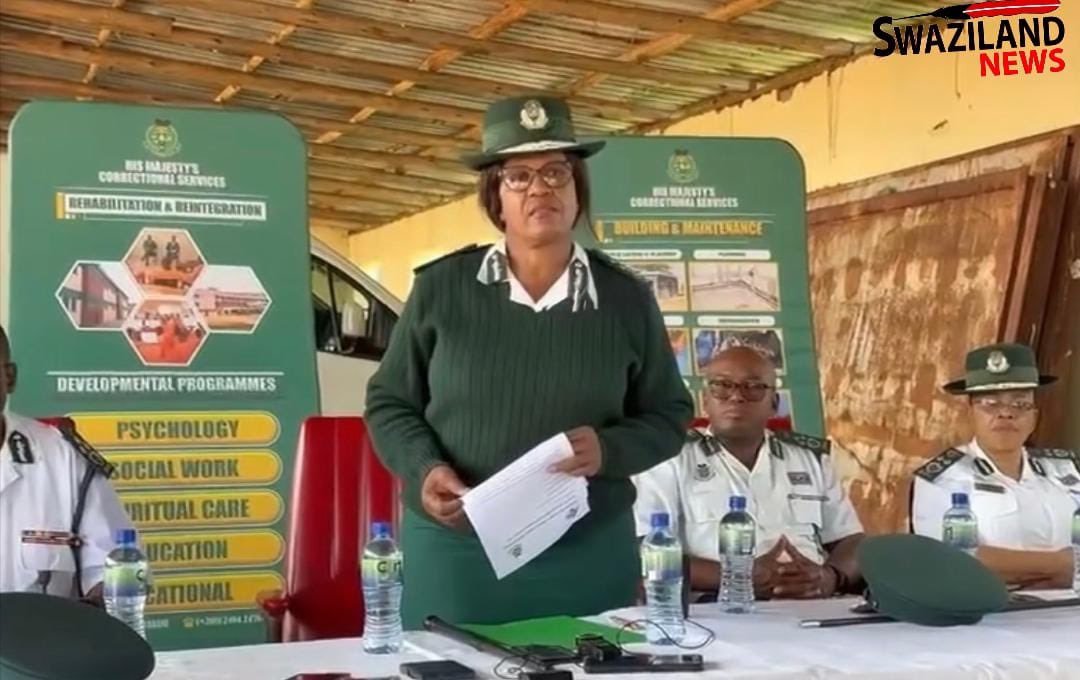 Overview of Eswatini's Democracy and Political Stability (as of November 15, 2025)
Eswatini, Africa's last absolute monarchy under King Mswati III, continues to face entrenched challenges to democratic governance and human rights. While the country has maintained surface-level political stability in 2025 with no large-scale internal protests, underlying tensions persist from the violent crackdown on pro-democracy movements in 2021. International assessments classify Eswatini as "Not Free," highlighting severe restrictions on political pluralism, free assembly, and judicial independence. The government's resistance to reforms, coupled with impunity for past abuses, fuels ongoing discontent among activists, opposition groups, and civil society. Economic pressures, including high unemployment and inequality, exacerbate these issues, though weak opposition structures have limited mobilization this year.
Democracy Status
Eswatini's political system remains dominated by the monarchy, with the king holding ultimate authority over the executive, legislature, judiciary, and traditional chieftaincy structures. There are no competitive elections for the head of government, and political parties are effectively banned under the Tinkhundla system, which favours royal appointees and limits opposition influence. Freedom House's 2025 report assigns Eswatini a score of 17/100 ("Not Free"), with just 1/40 for political rights and 16/60 for civil liberties. Key deficits include:
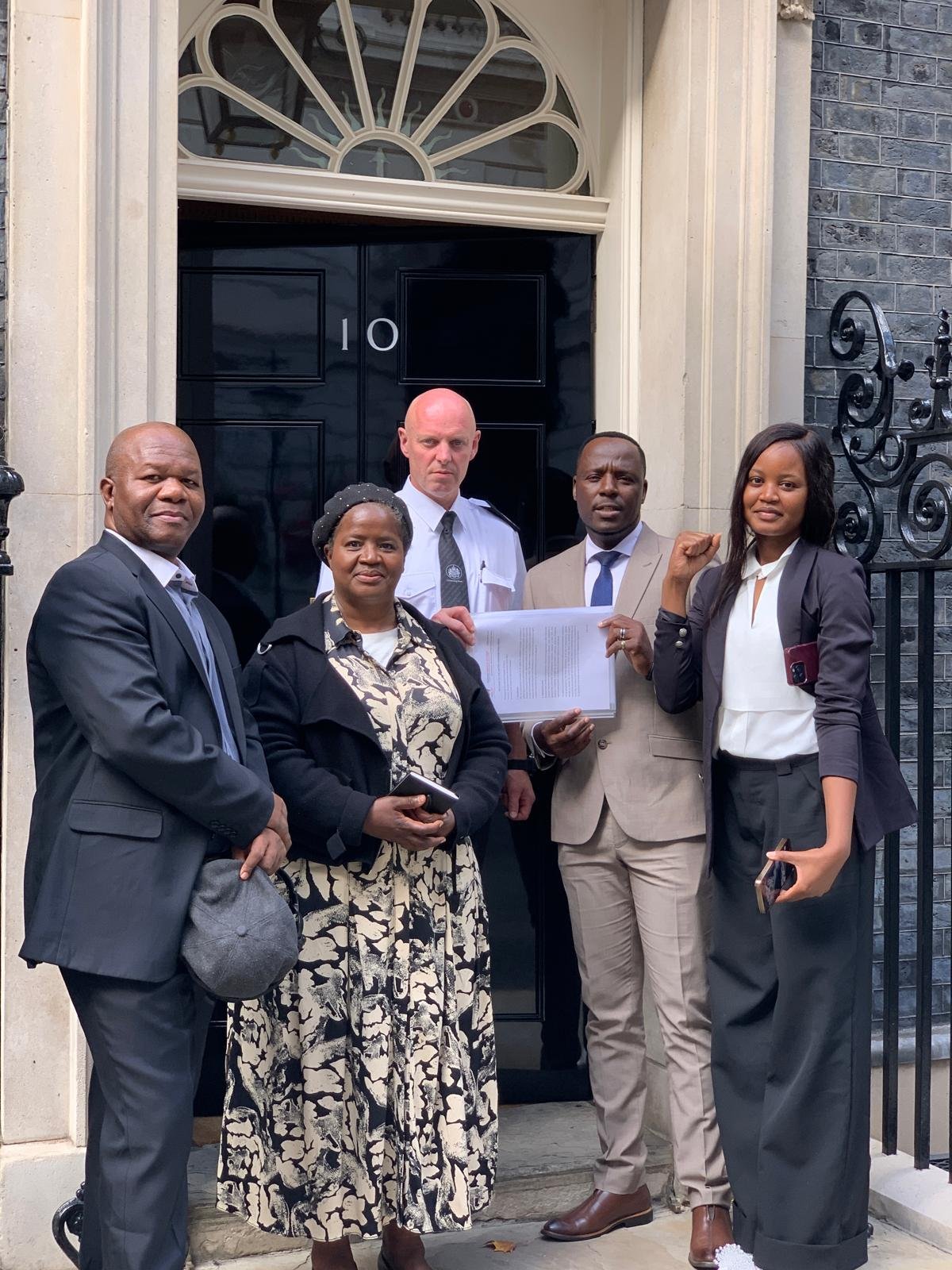 At 15:00 hours today, Thursday the 28th August 2025, the SWALIMO team headed by E Mduduzi Simelane, plus 3 other SWALIMO members and John Burke of ZHRO will deliver the petition as available to our readers at the LINK BELOW - this item will became available at 15:20 today as a timed item upon the website.
It starts with:
PETITION TO THE UNITED KINGDOM PARLIAMENT
Delivered by: Eric Mduduzi 'Gawzela' Simelane, President, Swaziland Liberation Movement (SWALIMO) On behalf of the Justice for Swaziland Campaign. [See Photo] However, Zimbabwe Chief Felix Ndiweni was cleared to enter the gates to Number 10, but, he had to cancel due to being hospitalised - we wish him a speedy recovery.
1. Introduction
"We, the undersigned members of the Justice for Swaziland Campaign, an alliance of political and civil society organizations advocating for democracy and human rights in the Kingdom of Swaziland (Eswatini), submit this petition to the United Kingdom Parliament through the Prime Minister's Office. This petition is made in recognition of the historic ties between the United Kingdom and Swaziland and in response to the grave human rights violations committed by the Swazi monarchy under King Mswati III."
LATEST FULL PETITION - CLICK HERE
The weather was fine today and we saw no rain at all during the Petition hand-over. We did get a moment of sunshine to fall upon the team as they delivered this vital document to the Office of the Prime Minister at the door of Number 10 Downing Street, his Official Residence. The staff and Police at Number 10 were more than helpful to our team who entered the secure compound. An experience they all will not forget in a hurry.
We were all welcomed into the gated compound to deliver this well written petition, the Policeman who accompanyed our group even took some photos of us all!
We anticipate some comments from the petitioners shortly
SWALIMO has applied and been granted permission to deliver a written petition regarding justice for citizens of Eswatini - to be delivered to 10 Downing Street, for onward transmission to the United Kingdom Parliament.
Keep the date and time free: 28th August 2025 at 15:00 a group of 6 people will enter the 'hallowed' gates to Downing Street to deliver a petition written by E Mduduzi Simelane, and delivered by E Mduduzi Simelane, 3 other Swalimo members - also delivering will be Zimbabwean Chief, Felix Ndiweni and ZHRO Founder John Burke - who have helped organise this, our first petition.
The image shown is for a previous ZHRO petition, and will be replaced after SWALIMO deliver ours after the 28th August 2025
Please support this initiative and be at the statue (of General B Montgomery) opposite the gated entrance to Downing Street from 14:00 onwards, for demonstration and speeches.
HhoHho Ward Council
HhoHho Branch Executive Coulcil
Information on Ward Councils
Informanation on 18 Branch Executive Councils
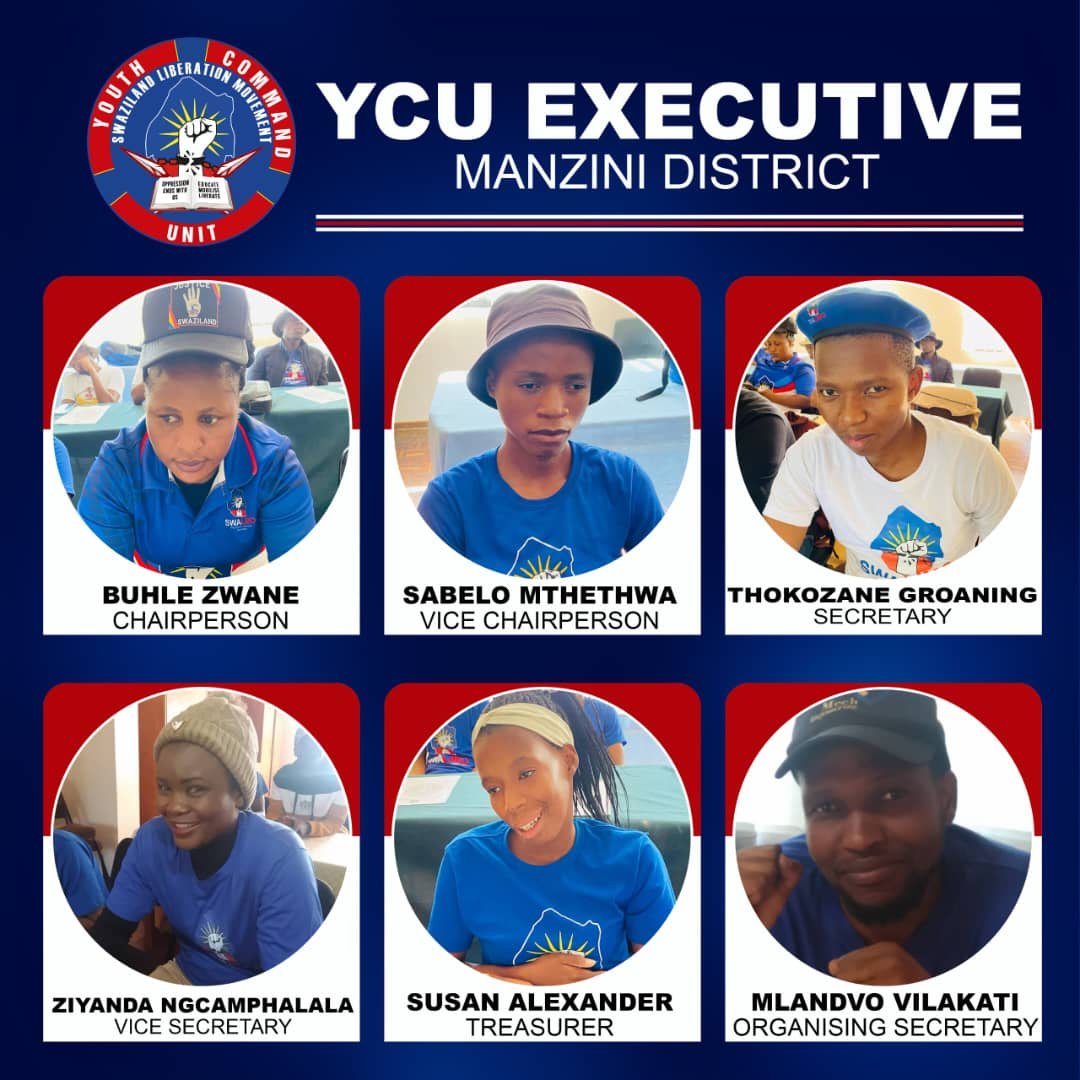 MANZINI DISTRICT ELECTIONS OUTCOME
Comrades
We extend our gratitude to all delegates, observers and SWALIMO stakeholders who made Manzini District Conference a resounding success. The conference concluded with renewed mandate to advance the struggle for Social, economical and Political freedom.
The conference reaffirmed our commitment to building a radical, democratic and disciplined youth battalion rooted in the aspirations of the Swazi majority.
Thatha Manzini Thatha!
Forward to Democracy Forward!
Revolutionary Regards
Cde Mzweleni Topdawg Vilakati
Secretary General
 Welcome to the Swaziland Liberation Movement
The Swaziland Liberation Movement (SWALIMO) is a Non-Profit organisation (NPO) founded in June 2021. The Movement is a democratic, mass-based liberation movement that campaigns for the advancement of democracy, human rights, equality, justice, safety and dignity for the people of Swaziland.
The movement aims to promote the principles and ideals of social justice, which advocate for equal rights and equitable opportunities for all, equal access to wealth, health, well-being, justice, privileges, and opportunity regardless of the person’s social, legal, political, economic status.
In fulfilling this aim, the SWALIMO seeks to lead and support the struggle of all democratic and patriotic forces to eliminate the oppressive ESwatini’s absolute monarchical system of governance and replace it with a united, democratic ESwatini in which all the people shall govern and enjoy equal rights and freedoms collectively.