
- Details
- Written by: Ebenezer Obadare
- Parent Category: Eswatini Situation
- Category: Constitutional Matters
- Hits: 414
 www.cfr.org/blog/limits-constitutional-engineering
from Africa in Transition and Africa Program
The Limits of Constitutional Engineering
Nigeria’s problems are unlikely to be solved by well-meaning amendments to its laws. July 30, 2025 9:15 am (EST)
If elite jousting over constitutional provisions and political structure is an indication of political vibrancy, Nigerian democracy has never been in finer fettle. In the past few months alone, two separate elite groups have convened to discuss matters pertaining to the country’s political configuration and the felt imperative to amend parts of the 1999 Constitution of the Federal Republic of Nigeria, respectively.
The first was the 83-member Parliamentary System Support Group (PSSG) which met in Abuja last November with the hope of instigating a nation-wide dialogue on what it describes as a “homegrown parliamentary system of government.” Arguing that the current presidential system is “not working” because “it does not fit into our cultural system and other values” and that “the last twenty-five years has not given Nigerians what they expected,” the Group called for “a home-grown parliamentary system” that not only reflects “the procedural aspects of governance but also the intrinsic values, goals and cultural nuances of the people it serves.” In accordance with the mood at the occasion, the Speaker of the House of Representatives, Mr. Tajudeen Abbas, extolled the virtues of “indigenous governance” and stressed the need for “crafting a legislative system that resonates with the everyday realities, aspirations, and diversity of the Nigerian people.”
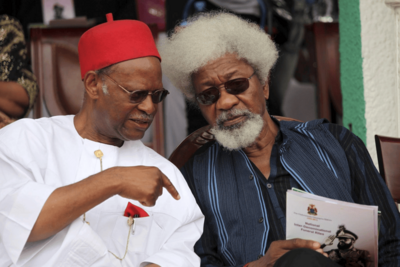
Two weeks ago in Abuja, the Federal Capital Territory (FCT), a group of elder statesmen under the auspices of The Patriots urged the country to “to adopt a full-scale restructuring of the country now or risk disintegration in future.” Whereas, for the PSSG, the adoption of the presidential system was the country’s “first mistake,” for The Patriots, the “original sin” of the Nigerian Fourth Republic is the 1999 constitution which, according to its spokesperson, former Commonwealth Secretary-General Emeka Anyaoku, is not fit for purpose because “it is not suited to the needs of a pluralistic country like Nigeria.” Therefore, for Anyaoku and The Patriots, nothing less than “a return to the truly federal constitution that began its [Nigeria’s] independence journey” will do.